Wednesday, September 21, 2011

NEWS

 Lost Cain Novel to be Published by Hard Case Crime

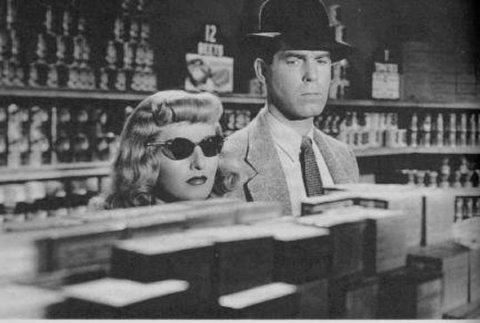
Up to no good: Barbara Stanwyck as the Dame and
Fred MacMurray as the Detective in  Double Indemnity.
Hard-boiled crime fans everywhere are salivating over news that Hard Case Crime, the publisher devoted to publishing vintage and new pulp crime novels in the style 30's 40's and 50's was in possession of a previously lost James M. Cain novel.
Cain, of course was the god of the noir novel,  whose work was immortalized in the classic films Double Indemnity, The Postman Always Rings Twice and Mildred Pierce, among others. He died in 1977 in Maryland, but had lived in Hollywood throughout the 1930s and 40s when was hired away from the New York papers to write for films.
Literati reached out to Charles Ardai, the editor of Hard Case Crime, to get the scoop. Here it is.


Where was the manuscript discovered?

I hunted for it for years and finally found it, with the help of my film and TV agent, in the files of an old-time Hollywood agent, H.N. Swanson, who had represented authors like Faulkner and Fitzgerald and Chandler and Cain when they worked in the film business.

How was it authenticated?
Swanson handled Cain’s work, so he had extensive files on Cain, and there’s enough of a trail to make me confident that the manuscript is the real thing.  It’s also got edits all over it in Cain’s handwriting, and the plot matches the brief description of it Cain gives in his biography. 

When did Cain write it?  Before or after titles that are in print?
After.  It was the last crime novel he ever wrote.


Why I Just Want to Smack the "Woman in White"

For years I've had this on my classics tbr pile but for some reason my attention always veered away. This summer the Wilkie Collins mystery moved to the top, and I dove in, eager for a good old-fashioned 19th-century yarn, my favorite kind.
I haven't been this disappointed since Anna Karenina, another doorstop of a novel which fails in every way except one, Anna, for whom Tolstoy has utter contempt and who only comprises about one-third of the aforementioned girth of the book (yeah go ahead, make my day. You know I'm right).
As I was saying, while  The Woman in White works as a thriller (or "sensation novel" as it was called at the time of publication) I found some of it, particularly parts of the ending to be dreadful.
If you're going to take readers on  a six-hundred page ride, you better give a good bang at the end, but here, you're left asking questions. Who is Percival and how did he meet the evil Count? I have no idea, and Collins apparently didn't think this was important. The bare bones of the central crime are explained, it's not the thousand percent solution that a book with this kind of longevity should have. Percival and the Count's true identities are never revealed and this is a major flaw.
Surprisingly, I thought there was an excellent balance of female characters -- the half-sisters Miss Fairlie fair and simple, Ms. Halcombe, plain and smart are cliches but balanced,  and all the other women, especially the redoubtable Mrs. Catherick, the stone-hearted mother of the woman in white in the title, are portrayed with exceptional skill and clarity. The Woman in White herself, not so much. Of course her place in the story is to set up the mystery, but for some reason I find her annoying and whiny beyond measure. Every time she appears in the story instead of sympathy I just want her to get to the friggin' point before the bad guys show up. Of course she's doomed, but even that can't endear her to me. Oh well. And by all means if you think I'm wrong, feel free to comment. The Moonstone anyone?

Tuesday, September 13, 2011

To Browse and to Borrow

photo by Caitlin Donohue for  SFBG.com
I LOVE this story! Just when everyone is predicting the death of the book, one brave soul opens a lending library. You know, for a small fee you get to borrow books. How positively 19th Century! The San Francisco Bay Guardian reports on the miraculous existence of Ourshelves, which was born from one woman's love for international literature.
Our heroine is a fan of hard-to-find European authors. She points me towards a slim volume by Hungarian author László Krasnahorkai entitled Animalinside and speaks reverently of Scottish poet W.S. Graham. “He’s not even in print here,” she tells me disbelievingly.
Tucked in the back of art and antiques shop Viracocha, Ourselves started as a personal quest and quickly became a beloved project, evidenced by donations from the SF Public Library and the famously reclusive writer Michael Chabon, who let founder Kristina Kearns pick what she wanted from his personal collection. Vivre le livre!
Bronte-mania
With two films based on Bronte novels set to premier soon, the talented sisters stand poised to dominate the cultural conversation this fall, a mere 150 since they died.
Charlotte, Emily and Anne Bronte have never really been "over" or out of style. Their spectacular talent left a legacy to be rediscovered generation after generation, and everything about their lives has fascinated readers from their first publication, notes Blake Morrison  at the Guardian:
The public were enthralled from the start. Curious visitors began turning up in Haworth once the truth about Jane Eyre's authorship got out [Charlotte had used a pseudonym, Currer Bell], and the numbers grew with the publication of Gaskell's biography two years after Charlotte's death in 1855. Some came from as far as America. Local shops cashed in, selling photos of the family. Patrick took to cutting up Charlotte's letters into snippets, to meet the many requests for samples of her handwriting. Charlotte was the sister everyone wanted a piece of; the reputations of Anne and Emily took longer to develop. But the books kept selling and groupies kept coming to gawp. By 1893 aBrontë Society had been formed, and a small museum opened two years later.
Morrison examines the truth behind the "tortured souls" image the sisters were cast in and examines the history and trajectory of their fame, which was immediate and wide spread.
After Charlotte's Jane Eyre appeared, the publication of Emily's Wuthering Heights and Anne's Agnes Grey, the Brontes became an industry through their talent and 150 years on, business is booming.

Sunday, August 14, 2011

Literati Loves...
Clicking around the net this rainy afternoon we landed on the luscious design blog Little Augury where we found this eye-popping dress.

We are SO excited about this dress!  New York designers  Zero + Maria Cornejo take the city's literary love affair to new heights with this Library Dress (our name) with which you can flaunt your love of the written word for all to see.


Wednesday, July 27, 2011

King on Golding

The U.K.'s Daily Telegraph runs a piece by Stephen King on his discovery of Lord of the Flies, and the impact it had on him emotionally and as a writer. A wonderful appreciation of William Golding's masterpiece about what happens when a group of boys gets stranded on an island.

E-Books Accelerate Paperback Publishers’ Release Dates - NYTimes.com

E-Books Accelerate Paperback Publishers’ Release Dates - NYTimes.com

The Times reports on the growing trend of publishing paperback books earlier than the usual year after the hardcover version of a book debuts, in part to compete with the e-book versions.

Do you think paperback books will eventually disappear?

Monday, July 25, 2011

Sunday, July 24, 2011

Literati Loves...

The New York Poetry Festival, happening on Governers Island next weekend. For the first time ever, the city's poetry groups like The Poetry Brothel, Nuyorican Poets, Futurepoem and Warrior Writers among others will gather in one place to showcase and revel in the written/spoken word.
The event and ferry rides is free but there will be food vendors and craft vendors at the event, or you can bring a picnic with you. You will definitely need a blanket and sunscreen. Saturday and Sunday, July 30 & 31, from 12 -5 p.m. For more information or tickets to the pre-festival fundraiser ($10) at the Bowery Poetry Club, click tpsny.org

Friday, July 22, 2011

Literati Loves...

Book Boxes!
These cute and functional boxes can be used to store valuables or papers. They come in three sizes (8.5", 9.5" and 10.5") and at under $20 each, they're the perfect combination of form and function for booklovers.  Available at Pier1.com

Tuesday, July 19, 2011

Got Book?

If you've got an idea for a whodunit rattling around your head, or are trying to write one but are stuck one way or another, the Mystery Writers of America has your back. The prestigious organization behind the Edgar Awards, has launched MWA University, which is dedicated to "giving back to the mystery community."
On August 13 they're holding a one day event where aspiring writers will be taught by established authors. Described as "not your grandmother's writing class," the full-day program is designed to teach participants the essential skills needed to write a novel, from the idea stage to the final editing. The focus is on the craft of writing.
The seminars will be available around the country. If there isn't one in your area ask your local MWA chapter to request one.

And when they say low cost, they're not kidding. $50 gets you a seat. For more information or to register (space is limited) click on the link above or call 212-888-8171.

Monday, July 18, 2011

Drink in the City

Sherry & Narcotics by Nina-Marie Gardner (Future Fiction, 239 pp. trade paperback, $14.95 )
By Vivian Lake
This searingly authentic portrayal of a young woman's downward spiral is the best and boldest writing I've seen in a long time.  First-time novelist Gardner pulls no punches with her prose. Her writing is so emotionally authentic and unfiltered you'll have to lie down to recover.

The first person perspective works brilliantly here to drop the reader right in the middle of a troubled young woman's self-delusional downward spiral.

Mary is a talented young American writer living in Manchester who's had some success as a playwright, but thanks to addiction, when we meet her she has given up serious writing and is writing term papers for money. She is lying to her family about her drinking (and occasional drugging), and has started a relationship with a man she is to damaged to assess properly. It quickly becomes apparent how bad thing are, and it's  obvious that they're going to get worse.

Mary's two addictions are alcohol and Jake. Jake, a fairly well-known writer reached out to her and half-heartedly started a relationship. Mary's reaction is to hang on to him like a life-preserver, infusing him with all the love, generosity and good will she would want, but not realizing that the whole time, he's just standing there while she creates the relationship around him. You're wondering if she will ever realilze the truth about him, you'll wonder just how long she can remain deluded about him. Let's just say longer than any sane person could be.

Gardner paints such a wretchedly accurate portrait of the drug and alcohol fueled haze in which Mary lives, the pain she's trying to obliterate bleeds off the page.

You will find yourself cringing, moaning, screaming at Mary as she drunkenly fumbles through work, relationships, and the danger she occasionally places herself in. The narrative is as addictive as its subject, compelling you to turn the page, get to the next horror, delusion, despair, and it is great writing that gets you to sit still for something you wouldn't want to witness in real life.

In spite of its dark subject matter, Gardner somehow weaves in comic moments, and writes a runaway train of a narrative which is as compelling as any thriller. And magically, she also provides a point of light, the possibility of enlightenment and redemption.

Thursday, November 25, 2010

Deja Clue

Moonlight Mile by Dennis Lehane
William Morrow/HarperCollins ($26.99 324pp.)
Review by Vivian Lake
Twice reading Lehane I've had to stop and skim back over what I've read to get my bearings. Once, at the jaw-dropping twist in Shutter Island (one of the best novels I've ever read) and now reading Moonlight Mile, to make sure I haven't missed anything, because situations seem to arise out of nowehere. Lehane's latest, a sequel to Gone, Baby, Gone seems to be written by someone else entirely.

Lehane's well-documented writing chops (he's also the author of Mystic River, which was made into an Oscar-winning film by Clint Eastwood) make Moonlight Mile doubly disappointing, because by now you expect him to blow you away.

That said, this was my first time reading a Kenzie-Gennaro story, which may have made a difference but shouldn't have. Patrick Kenzie and Angie Gennaro are two detectives now-familiar to Lehane fans, but as all avid readers know, you should be able to pick up any one of a series of detective novels and not feel you've missed anything. As far as the history of the two investigators goes, the story is solid, the problems are all in the current story, which isn't that compelling or believeable.

Sunday, November 21, 2010

The Rise of the Ray-gunslinger

Space Westerns
By Stefan Slater
Contributing Writer
StarcraftMankind has been fascinated with exploring outer space for decades and also with the idea of one day, actually living on another planet.
Countless books, movies, TV shows, and games have been created to explore what life would be like for humanity in space. Oftentimes humanity is depicted as colonizing planets, meeting intelligent aliens, and discovering the secrets of the Universe – all from the comfort of advanced spaceships with sparkling white exteriors. Civilization and peace spread throughout the Universe, everyone dons a spandex uniform, and humanity is elevated to an even higher level of technological and intellectual understanding. Basically, mix a London Gentlemen’s club with lasers and green women, and you have a popular version of humanity’s potential future in space.

Firefly - The Complete SeriesBut what if that wasn’t entirely the case? What if life in space wasn’t glamorous and enlightening? What if, on the planets furthest from civilization, humanity was reduced to a pioneer existence, forced to eke a meager living amongst a harsh and unforgiving landscape? Well, that is what the sub-genre of science fiction known as Space Westerns, chooses to examine.
The sci fi sub-genre has its early origins with comics and books from the 1920’s, such as with Buck Rogers in the 25th Century A.D. or Flash Gordon. The protagonists in these stories were tough men guided by strong morals, who rode into towns (or in this case planets) on their rockets, to help the simple townsfolk fight off corrupt and evil men.

Saturday, November 20, 2010

The War Inside
By Roberta Gately
(Gallery Books, Trade Paperback 304 pp. $15)

Review by Vivian Lake
A young woman without many options finds herself compelled by a photograph in a magazine to help the sick, the ill, the desperate and disenfranchised wherever they may be. This calling propels young Elsa Murphy, a girl from the gritty streets of Dorchester in Boston, to go to college, become a nurse and volunteer to work anywhere in the world she is needed.

This is also the story of Parween, a young Afghani who is vibrant, intelligent and ambitious, but because of where she lives will have a very different life.

Based on the author's experiences in Afghanistan and other war-torn nations, this novel serves both as witness and warning. While the fictional Elsa lands in Afghanistan shortly after the September 11th attacks, the author first worked there during the Russian invasion in the 1980s, which gives her a deeper knowledge of the area and its people than is seen on the evening news.

Roberta Gately talks about Lipstick in Afghanistan
video courtesy of Simon & Schuster

Elsa, who has never been outside of Boston, finds herself in the remote Bamiyan province of the country. "...Bamiyan seemed chisled out of some long-forgotten age where it had been frozen in time." There is no electricity or running water and food is cooked over open fires.

Elsa is provided with a small house and a cook and not much else. Bed is a foam mattress covered in fabric and water for bathing and cooking will be brought to her from a nearby well. Elsa barely has time to process this when she
finds out that head of the office has to go to another part of Afghanistan and that she will be in charge of the clinic in which she was to be a staffer.

Petrified but determined, she arrives at the small, overwhelmed hospital, meets the staff and begins her work steamlining procedures and learning as much as possible as quickly as possible so she can help the patients.

Elsa soon has a circle of close friends; Hamid her driver, Laila and Ezat, the doctors she works with, and Amina her chaperone (single women can't live alone in Afghanistan). She also befriends the American servicemen in the area, who give her their perspective of the area, which she finds at odds with the warm hospitable people she knows.
She also gets to know the vibrant people in the village - the Hazara - who fought and succeeded in getting the Taliban out of their village. They remain a threat, having taken over a village a few miles north, but for the most part, Bamiyan is free.

Woven through this story is the history of Parween, who has no freedom. Betrothed at age twelve against her wishes, Parween has to wear the veil, cannot go out alone, and can't go to school. Her soul rebels at the thought of the same future of childbirth, housework, fieldwork without end. Abuse from the husband or his family is often part of life for young wives. Parween sees her best friend packed off as a third wife to a wizened old man and despairs of her future.

How Elsa and Parween meet and how their friendship affects them both is the culmination of the story. Climax and parable, the book questions the future of a nation that shackles half its population in slavery, and how the simple act of friendship can open doors actual and spiritual, and can inspire heroism
These Vampires Don't Sparkle

American Vampire -Review
By Stefan Slater
Let’s face it, the vampire is no longer feared. What once was an evil, blood-sucking demon from hell, has deteriorated into a brooding, sensitive pretty-boy who pines for romance and has renounced drinking the blood of humans. Dracula would be ashamed to call himself a vampire in today’s Twilight age.

Fortunately for the pale Transylvanian, the graphic novel American Vampire not only restores a bit of much-needed attitude and maliciousness to the vampire breed, but also adds a refreshing twist.

Written by Scott Snyder and Stephen King, and illustrated by Rafael Albuquerque, the plot of American Vampire follows the 19th century outlaw Skinner Sweet, and aspiring 1920’s actress Pearl Jones. Sweet is a ruthless, evil man, who rides with his posse across the American West robbing and killing whomever he wishes. Sweet eventually has a run-in with a group of Pinkertons, and during the ensuing struggle, is transformed into a vampire.
Literary News

And so it begins. The media circus which always surrounds a royal wedding. On the heels of Prince William's engagement, Simon & Schuster's Gallery books announced William & Kate: The Love Story by Christopher Andersen, the author of The Day Diana Died. Publication iis scheduled for  February 2011.
Louise Burke, Executive Vice President and Publisher of Gallery Books, said "With another royal wedding imminent, this book will shed light on a relationship that has remained a mystery yet is a true love story. And there’s no one better to tell this tale than Christopher Andersen."  
Bali brings to mind gorgeous unspoiled beaches, tropical weather, and romantic isolation, but literature? Not so much. Nevertheless The Japan Times reports, the annual book fest in the lush hills of Ubud involves more than lying on the beach with latest paperback.
"Mix a bit of paradise and lavish creature comforts, add a dash of cultural magic, stir with persistence and presto . . . Ubud has become one of the top literary festivals in the world," rhapsodizes the Times.
This year 137 authors from 128 countries participated and 183 panels were conducted, reports the Japan Times. Book now for next year's Writers & Readers festival, which takes place October 5-9 2011.

The fourth annual  International Prize for Arabic Fiction has announced its long list of 16 titles under consideration for the prize. This year seven women made the cut (a record), and religious extremism, political and social conflict and women's struggles emerge as key themes, the center announced.
The International Prize for Arabic Fiction is awarded for prose fiction in Arabic and each of the six shortlisted finalists receives $10,000, with a further $50,000 going to the winner. It was launched in Abu Dhabi, UAE, in April 2007, and is supported by the Booker Prize Foundation and the Emirates Foundation for Philanthropy.
The winner will be announced at the awards ceremony in Abu Dhabi on Monday 14 March 2011, the eve of the Abu Dhabi International Book Fair.

Closer to home, The Black Writers Museum in Philadelphia opened its doors this summer, with a writing camp for kids and an exhibit on the writers of the Harlem Renaissance.
Supreme Dow, the founder and executive director of the museum, has funded the non-profit organization out of his own pocket and from the donations of others, reports Philadelphia Neighborhoods.  Dow's plans for the museum include preserving and teaching the history of Black literature, and creating a place where it can thrive and continue.
“If we continue to teach about what has come before us it will inspire other writers to come about,” Dow said. “We want to be a hub for literary conversation so the next Zora Neale Hurston will walk through these doors,” he told Neighborhoods.

Google reached an agreement with Hachette Livre, the largest publisher in France, to scan thousands of out-of-print titles for its digital library project, reported The New York Times.
Hachette will determine which titles will be scanned and Google will be allowed to sell the titles as ebooks or other formats and will share the revenue with Hachette. The deal is unique among French publishers, most of whom have sued Google for copyright infringement, and differs from the proposed settlement with American publishers, under which publishers opt in or out of the digitization project with no control over which titles are scanned, reported the Times.

New York writer Victor Lavalle won the 2010 Ernest J. Gaines Award for Literary Excellence for his novel Big Machine, about a hustler who joins a group of paranormal investigators. The novel won the 2010 American Book award, best Sci-Fi Novel of 2009 and was named "most valuable novel of 2009 by The Nation magazine.

In Indianapolis, the Kurt Vonnegut Memorial Library and Museum has opened,showcasing a replica of the writer's office, his actual typwriter and
other personal belongings, as well as a library devoted to his work and criticism
of it.

Chinua Achebe, the world-renown African author turned 80 this week, reports the Guardian of Nigeria. "Achebe has helped not only to put Nigeria and Africa in general on the global literature map, his entire career has been devoted to a validation of the African aesthetics and experience," said the Guardian.
Achebe is currently teaching at Brown University in Rhode Island.
Tuesday, October 26, 2010

Let the Steampunk Zombies Roll

By Stefan Slater
Literati Contributor
Dreadnought by Cherie Priest
Cherie Priest has written a total of three books (Dreadnought, Clementine, and Boneshaker) that take place in the “Clockwork Century.” While each book contains characters and references in the other books, they can still be read independently from one another without missing the overall plot or context of the story. The protagonists of these books are all women; they are strong, independent, and above all, willing to blow away a zombie head or two.
Vinita “Mercy” Lynch is working as a nurse in a war hospital in Richmond, Virginia, when she learns that her husband has died in a POW camp. Then she receives a telegram from her estranged father, who is dying  in the frontier town of Seattle, and wants desperately to reconnect with her. With little else keeping her in Virginia, she embarks on the long and arduous journey to the distant Western Territories.
Priest conjures an alternate history in which the Civil War has lasted for nearly twenty long years, and slavery is no more. There are airships, steam-powered robots, and fortress-like trains capable of leveling entire forests. Oh, and there are zombies: hordes upon hordes of flesh craving, gore-covered, rotting zombies.
Mercy’s journey through the war torn Border States is fraught with danger, and she barely makes it to the Mississippi River. In St. Louis, her trip takes a turn for the worse as she boards the only train headed out west: the monstrous Union steam engine known as the Dreadnought. It supposedly carries deceased Union soldiers to their final resting places, but Mercy learns that the Dreadnought also carries a mysterious cargo, which draws considerable Confederate attention, ranging from rebel bushwhackers to diabolical mechanized walkers.
Something far worse than outlaws awaits Mercy out west, and it could spell the end for not only those aboard the Dreadnought, but also the entire United States as well.
Priest does an excellent job of balancing Mercy’s mental and physical journey. The grief of losing her husband, as well as the painful possibility of reconnecting with (and then possibly losing) her long lost father.
Dreadnought carries a sort of Steampunk vibe, and because of that, it doesn’t seem unreasonable that there are robots or flying machines, as they are all defined by technologies that existed at that time. Discussing the zombies will give away some of the plot, but her reasoning for their existence is not unbelievable, and she easily places a horror element into a sub genre that very rarely has any.
The only flaw one may find with Dreadnought is that Priest creates such a fantastic world, but only examines a small portion of it. The book reads rather quickly, and will most likely leave the reader wanting to know more.
Dreadnought is an excellent read set in a unique world that is unlike most anything in Science Fiction today.  Reading this novel will most definitely spur you to pick up another one of Cherie Priest’s books, just so you can revisit “The Clockwork Century.”
Authors after Dark has nominated Dreadnought for steampunk novel of the year.


Check out video below of  Cherie Priest's interview with Science Fiction Book Club at the Dragon Convention in Seattle last month. She talks  mostly Boneshaker but at about 3 minutes the talk turns to Dreadnought...

Monday, October 25, 2010

Straight, No Chaser

It never fails. No matter what I've planned to read for this blog and how carefully I've penciled it in my to-do list, the minute I walk into a bookstore all bets are off. Anything could happen, and usually does. LeCarre's latest languishes on my nightstand because  I found a spectacular anthology that I just had to read right away, and lucky for you, I'm going to tell you all about it.
Blood, Guts, and Whiskey  (Kensington books, trade paperback, $14.00), is a collection of hard-boiled stories from the editor of ThugLit.com, Todd Robinson. Robinson curated these  24  tales of moral turpitude by 24 kick-ass writers, and, ladies and gentlemen, this is .44-caliber prose.
It's all here:  Cynical anti-hero/heroines of dubious repute, murky pasts, dames up to no good, and use sex as a weapon, and enough violence so that the blood spatter brightens up the dark mood. The characters and scenes fairly jump off the page, immersing you so quickly the beer and desperation hit you like a wave of humid air.
 Jordan Harper's Red Hair and Black Leather, the opener, sets the tone and starts this trip to the dark side where you'll meet a mobster with a bloody side job, a writer who discovers the darkness within, a couple of mobsters who run into trouble when someone flips the script on them, a shopkeeper at the end of his rope, and a mother who gives up her soul to make amends.  That's just the tip of the iceberg. This is a stellar collection that won't disappoint.

Saturday, October 09, 2010

Mario Vargas Llosa Reacts to Nobel Win

The yearly speculation surrounding the Nobel for Literature is always frenzied and reaches a fever pitch as writers, editors and columnists from around the globe postulate and speculate, but the frenzy rarely, if ever, mentions the winner, and this year was no exception. The Peruvian novelist, who is admired and respected around the world, didn't make anyone's short list, although in South America he's afforded the same respect as Garcia-Marquez.
Below check out the video of the writer's press conference at Instituto Cervantes in New York yesterday reacting to the win. He gives statements in both Spanish and English.


Vargas Llosa's work is not only artistically beautiful to read (in the original Spanish), but spans a wide breadth of forms (journalism, plays, poetry novels, criticism) that demonstrates a powerful talent. One of his most powerful books, The Feast of the Goat is a harrowing account of the last days of the Dominican Republic's fomer dictator General Rafael Trujillo.  In Aunt Julia and the Scriptwriter he uses humor to weave the story of  the beginning of his journalism career at age 15 and the start of his affair with his first wife, Julia Urquidi who was more than ten years older and related to his uncle by marriage.

Picador, a division of MacMillan publishers announced that they will immediately reprint 10 of the writer's titles in paperback to meet the expected demand after the announcement.
Vargas Llosa lives in Madrid, Spain and Lima, Peru. He is in New York for this year teaching creative writing and literature and Princeton University.

Check out this slide show of Vargas Llosa photos and the audio (in Spanish) of the first people to congratulate him, a radio station in Peru.